









Description
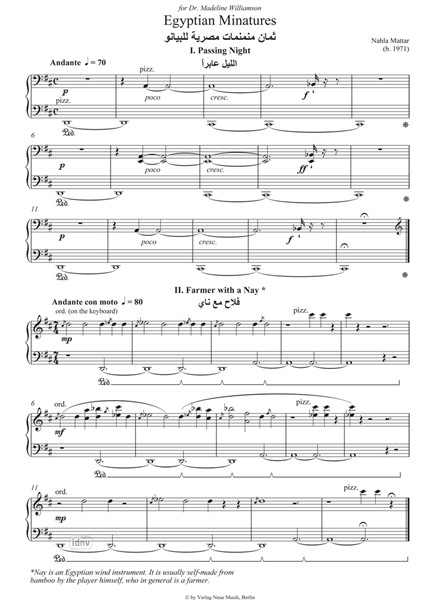
The eight pieces that comprise Egyptian Miniatures capture an evocative and haunting portrait through a fine-tuned
lens. It gives the listener a glimpse into the past (Isadora) and into contemporary culture (Pulse of the Streets). Nahla
Mattar achieves this remarkable musical image through refined minimalistic vocabulary, which incorporates extended
techniques for the piano. Death Improvising utilizes six tones, whereas the opening Passing Night only uses five. Each
piece is reminiscent of images from the early historical photographers Félix Bonfils, Francis Firth, and Maxime Du Camp.
Their Egyptian explorations of the 19th century also captured the interior mystique of a land and its people, remote from
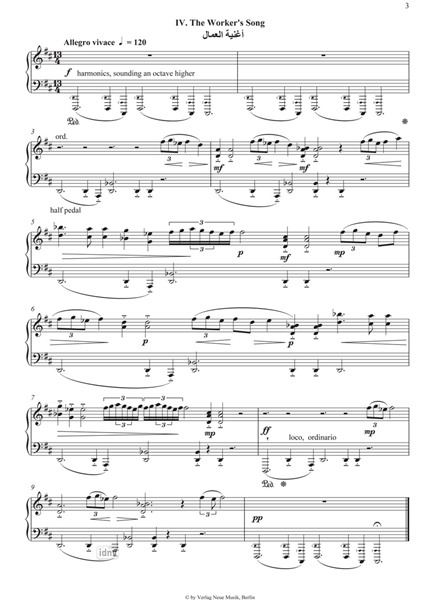
much of the world. Distinct cultural personas emerge in the miniatures (The Workers Song, Farmer With a Nay) and
the listener is transported from their normal frame of reference, producing a dream-like quality that has the capacity
to bend, shift , and shape this sound world into a journey through time and space. Egyptian Miniatures might well be
considered the perfect anti dote to large-scale, virtuosic compositions, and each portrait conveys a deeply personal
message from the composer. The pulsing, shift ing rhythms of the desert dance in El-Hagalla suddenly dissolve into the
quiet aura of The Nile’s Sweet Romance, which concludes the set and could be either the wistful dreaming of the earlier
Isadora back in her Roman era in Menia, Egypt, or the eternal longing from an equally plaintive 21st century heart.
At its American premiere in August 2008, Mattar’s pieces received an instant standing ovation.
Dr. Madeline J. Williamson, Abiquiu, New Mexico