






Description
Performance Guide
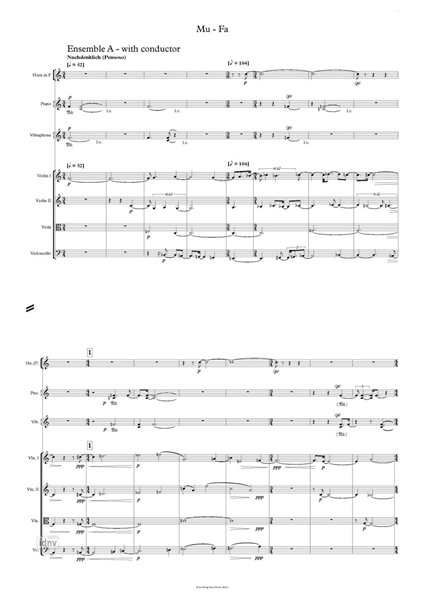
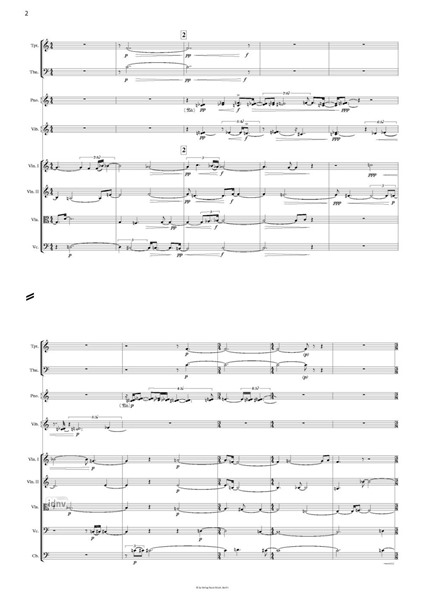
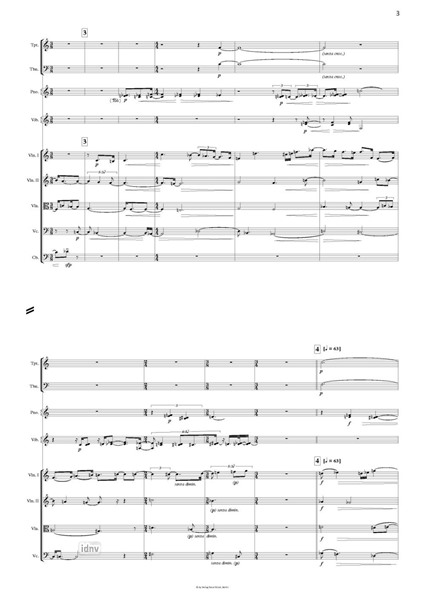
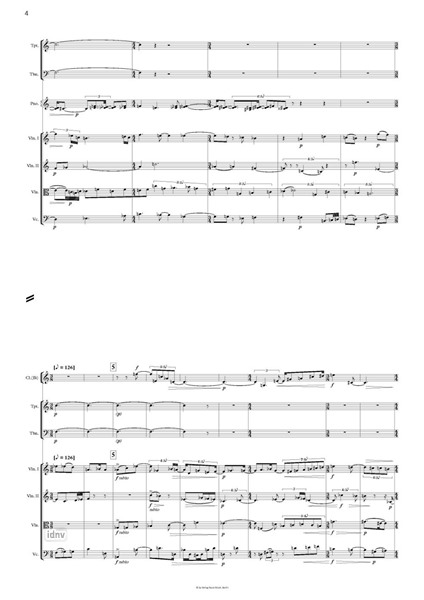
Ensemble A is conducted, and is conventionally notated with respect to vertical alignments and tempo. It is important to follow the specified tempi, even allowing for some expressive shaping.
NB. The last cue for the pianist in ensemble B starts at 15’00” – theoretically simultaneous with the second beat of the seventh bar of Figure 31. in actuality, some adjustment might need to be made to the tempo, or to the ‘silent beats’ in the last nine bars, if this ‘ideal simultaneity’ does not occur. The piano in ensemble B should have fallen silent before the final three bars in ensemble A.
Ensemble B (p. 28) is not conducted. The instrumentalists play in small groups, but mostly independently of each other and in different tempi (exceptions – in ‘rhythmic unison’ are noted below). Metronomic indications should be followed as accurately as possible, allowing for individual articulation and expressive flexibility.
The cues (entry-points) for ensemble B are timed, with co-ordinated stopwatches, by a conductor/timekeeper, or by observing some kind of timescreen. The performers concerned in each successive cue should enter simultaneously at the specified time, and then continue independently; stopping – most probably – at different, and uncontrived, times from each other, and – in some instances – overlapping the following cue.