








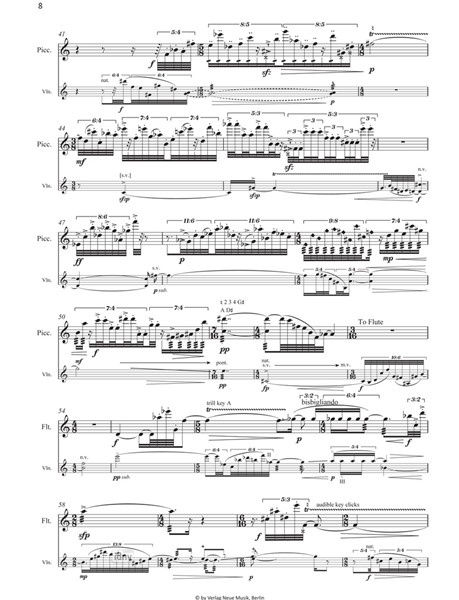
Description
The programme note for the first performance was as follows:
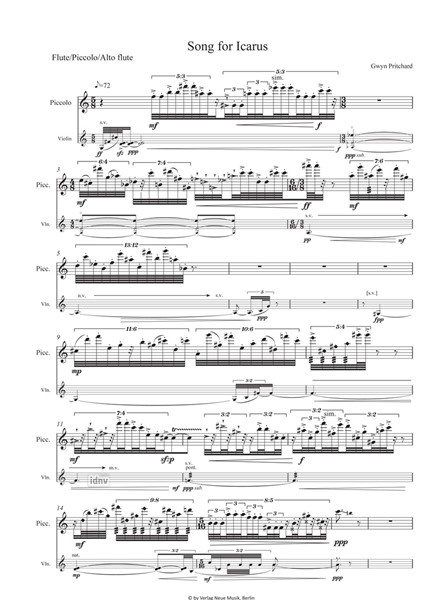
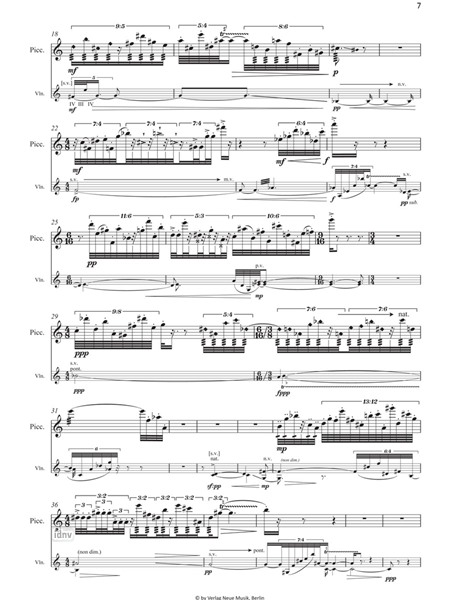
The relevance of the Icarus myth to this music is to be found at several levels. Perhaps most obscurely, the form of the piece makes much use of pitting height against depth, but more obviously it includes much figuration which, at times,
might well be heard as a kind of imitation bird-song. Imitating birds and soaring to great heights was, of course, something that Icarus learned all about with fatal consequences.
At the heart of the Icarus myth lies the fact that, able to fly like a bird, he became a victim of his own fascination for the beauty and warmth of the sun; the tragedy of his death is set against the thirst for ecstasy that caused it. Similarly, almost uninterrupted throughout this piece, a lament-like, slow ‘melodic’ line is set against fast, florid material that hovers between being ecstatic pseudo-birdsong and the demented wailing of a mourner. So is this perhaps also a lamentation or threnody for Icarus, and therefore an expression of a universal contradiction symbolised by his legend?